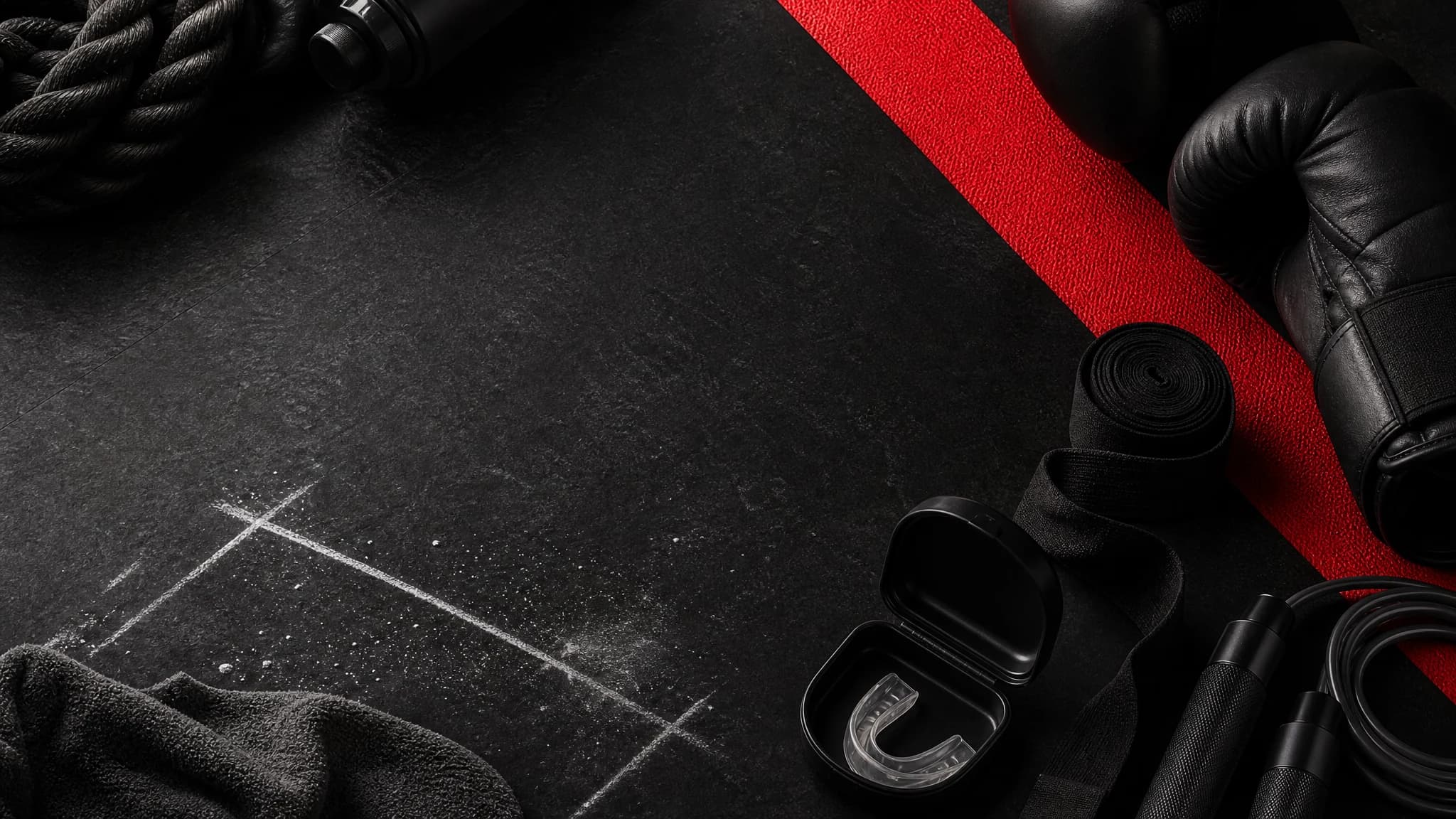
If you’re looking for kickboxing in Prague as a beginner, you’re usually not just thinking about the timetable. You need to know whether you can turn up with no experience, whether hard contact is waiting for you straight away, what to bring with you, and how to tell whether a class is not just intense but well coached. That is exactly what decides whether the first few weeks lead to confidence or confusion.
Contents
To start with, look for a clear environment
A beginner usually needs three things: a clear class structure, a coach who can scale the pace, and an environment where there is no pressure to pretend you are experienced. If you get that, kickboxing is surprisingly accessible even without any previous combat sport background.
A good first impression does not come from toughness, but from clarity. You should understand why you are warming up in a certain way, why a specific stance is being taught, why a simpler combination comes first, and when you should slow down. If a class is just loud, fast and without explanation, a beginner often is not learning technique, but simply surviving the pace.
That does not mean the training should not be demanding. Kickboxing naturally works with intensity, coordination and dynamism. The difference is whether the challenge supports learning or hides a lack of system.
How to choose kickboxing in Prague
In practice, organisation and coaching matter more than a flashy description of the style. A beginner needs structure, not a show. So when looking at gyms in Prague, do not just focus on photos and slogans, but mainly on how they describe the first visit, beginner level, equipment, class capacity and progression.
For beginners, ARENA GYM has the advantage that kickboxing is not a separate world cut off from the rest of training. If you later find you need more strength, mobility or a fitness base, you can build on kickboxing with other formats in the same environment.
- The class clearly states that it is suitable for beginners, or that the coach can split levels.
- The coach explains technique before performance and corrects safety-related mistakes.
- The pace can be scaled without making you feel like a problem for the group.
- It is clear what equipment you need straight away and what can wait until later.
- Sparring, harder contact or moving between levels follow rules, not chance.
You may also want
What to expect in the first few weeks
Kickboxing can be an excellent fitness and technical direction, but only if you give it realistic expectations. The first few weeks are not about performance, but about movement, coordination and whether the format suits you.
It is normal for the beginning to feel uncoordinated. Hands, feet, guard, breathing and distance are all being learned at once. That is exactly why it is not a good idea to judge your first class by whether you looked experienced. A better question is whether you understood the next specific step.
If you are coming back after a longer break from sport, after illness, with a health limitation or with pain, do not treat kickboxing as a test of willpower. Tell the coach about any relevant limitations in advance and choose an intensity you can control. If you have significant pain, dizziness, shortness of breath beyond normal exertion, or are returning after an injury, it is sensible to discuss your return to training with a doctor or physiotherapist.
- Weeks 1 to 2: get familiar with stance, movement, basic punches and class rules.
- Weeks 3 to 4: start noticing the rhythm of combinations, breathing, and when you are tensing up unnecessarily.
- Month 2: focus on consistency, your own equipment, and whether you want kickboxing mainly for fitness, technique, or as a complement to strength training.
Choose equipment for the task, not a shopping list
Distinguish shadowboxing, pads or bag work, partner drills and sparring. These are different tasks, not mandatory milestones on a timetable. Verify the content and equipment before booking; this article does not confirm a loan service.
WAKO rules describe protective equipment for competitive fighting disciplines. They are not automatically the checklist for every recreational class, and competition glove weight does not determine suitable training gloves for every person.
Practical follow-up
| Task | Prepare or verify | Do not assume |
|---|---|---|
| Movement and shadowboxing | Sports clothes, water, towel and surface rules | Every conditioning class has the same content |
| Pads or bag work | Required gloves, wraps and their correct fitting | Gloves are available to borrow |
| Partner drills | Planned contact and required protection | Partner work is always non-contact |
| Sparring or contact practice | Explicit level, conditions and complete protection including your own mouthguard | Gloves or headgear remove head-injury risk |

Want to work on this in practice?
Kickbox
When kickboxing makes sense and when to choose something else
Kickboxing is not just ‘cardio with punches’. It is a technical discipline in which fitness develops through movement, combinations, reactions and work in more intense intervals. For many people, that is more enjoyable than monotonous endurance training, but it also requires patience.
If your main goal is to build muscle or work on the technique of basic strength exercises, kickboxing on its own will not replace a targeted strength programme. If you want to improve rhythm, coordination, explosiveness and tolerance for higher intensity, it can be a very good complement or your main coached class.
- It makes sense if you want a more dynamic coached class, enjoy technique, and do not mind learning gradually.
- It can be a good fitness direction if you do not want to compete but do want training with a clear structure.
- It may not be the ideal first choice if you are currently dealing with acute pain, a strong fear of contact, or need a very individual rehabilitation-focused approach.
How to tell whether this is the right fit for you
Just as important as the actual class content is how you feel in it. If you can find your bearings in the first few visits, understand the basic instructions and leave feeling that you know what to build on next, that is a good sign. If, on the other hand, the class feels like nothing but noise and pressure, the issue may be the format or the coaching, not you.
You can also recognise a good beginner start by the fact that after class you do not just feel exhausted, but slightly more confident. You know what to try to do better next time, what you still cannot do, and at the same time you do not feel you have to pretend to be at a higher level.
That applies equally to women, men and people coming in with no combat sport background at all. A good beginners’ class is not built on everyone acting advanced from the first minute.
Before leaving home and after the first class
Check the branch, time and level in the live schedule. Arena Gym describes barefoot practice and gradually obtaining wraps, gloves and a mouthguard. This is neither confirmation of loan equipment nor a promise that every beginner slot has no sparring. Verify the specific class.
Leave time for reception, share relevant limitations and learn how to ask for a pause or clarification. Afterward, consider whether instructions and contact rules were clear and whether you could reduce the intensity, rather than counting combinations.
Let gloves dry, wash wraps and do not share a personal mouthguard. Headache, dizziness or nausea after a blow are not a successful-workout signal. With suspected concussion, stop sport for the day and have a healthcare professional assess return.
The first class, contact and head safety
Check whether the class is technical, conditioning, pad work or includes partner contact. A beginner does not need to spar, and contact intensity must be agreed rather than assumed.
After a hit to the head, stop for headache, dizziness, nausea, confusion, balance or vision problems, or unusual drowsiness and seek clinical assessment. Worsening symptoms, repeated vomiting, seizure, loss of consciousness or new weakness need emergency help. A coach alone should not clear return to contact.
Common questions
Can I come to kickboxing with absolutely no experience?
Yes. A well-run beginners’ class should take into account that people are arriving with no martial arts background. The coach should explain stance, basic punches, simple movement and pace so you can learn gradually.
Does the first kickboxing class mean hard contact straight away?
No. Your first visit should mainly be about basic stance, movement, punches, guards, rhythm and working at your own pace. Hard contact or sparring should not be an automatic expectation for a newcomer.
What should I bring to my first kickboxing class?
Bring sportswear, a towel and water; Arena Gym describes barefoot practice. Confirm the chosen class and its required gloves, wraps or protection before visiting. This article does not confirm loan equipment or make any contact guarantee.
How often should a beginner go to kickboxing?
Once a week is enough to try it out and get your bearings. If you want to see faster progress in both technique and fitness, it usually makes more sense to go twice a week and support it with sensible recovery or strength training without overdoing it.
Is kickboxing suitable for someone who doesn’t want to compete or play a role?
Yes. For a lot of people, kickboxing is a good entry point even if they are not looking for a competitive sport, but for a direction that combines fitness, technique and a clear structure. What matters is not gender or the sport’s image, but the quality of coaching and how clearly the gym works with beginners.
Can I attend without my own gloves?
It depends on the specific class and its rules. This article does not confirm equipment loans. Ask what you must bring for pads, bags or contact work before booking.
Is every beginner class guaranteed to have no sparring?
The level label alone is not a guarantee. Verify planned partner work, contact and participation conditions beforehand. Hard contact should not be an unexpected obligation.
When do I need a mouthguard?
Confirm the requirement before contact work and bring your own properly fitting mouthguard. WAKO competitive fighting disciplines require it; recreational classes have their own rules. It does not guarantee protection from concussion.
Want to work on this in practice?
A good start in kickboxing is clear, not intimidating
A beginner does not need to look like a fighter. They need to understand the basic rhythm of the class, respect the technique, ask questions when something is unclear, and give themselves time to adapt.
If you’re choosing kickboxing in Prague, look for a place where getting started is straightforward, equipment is handled practically, and there is no embarrassment in starting from the absolute basics. That matters far more in the first few months than how hard the training looks or the sport’s image.
Sources
Author: ARENA GYM Updated: 2 October 2026